Best Time for a Hair Transplant in Lahore: Summer Heat, Smog Season and Ramadan Explained
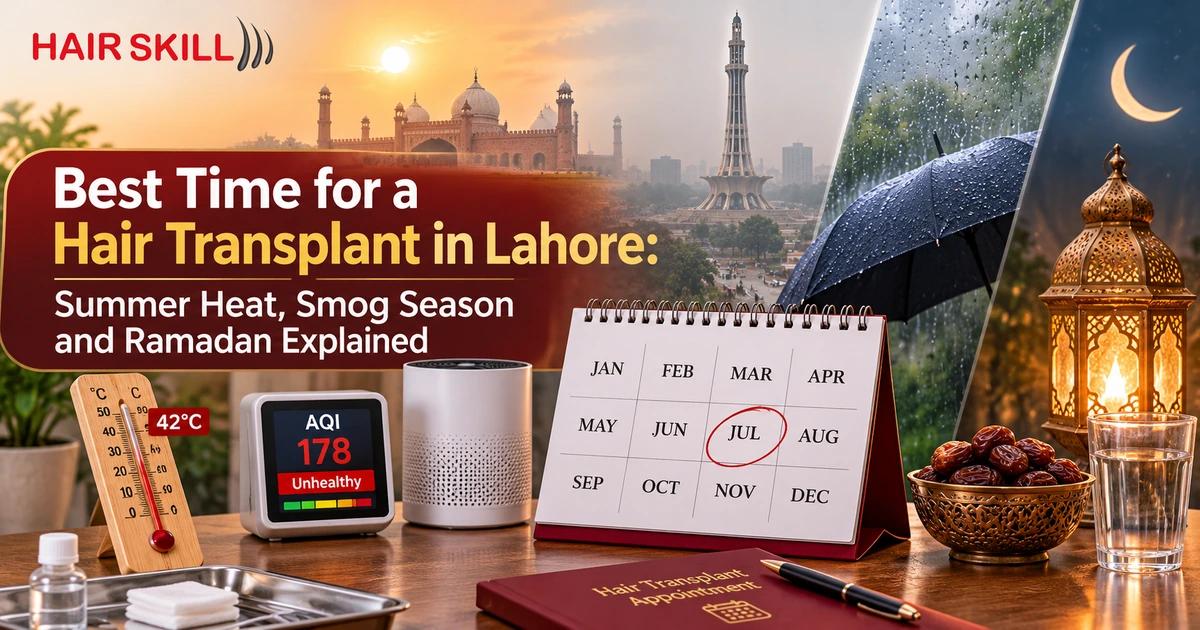
Best Time for a Hair Transplant in Lahore: Summer Heat, Smog Season and Ramadan Explained
You can undergo hair restoration during any month of the year, and it has no negative impact on the final density of your hair. Surgeons perform procedures like FUE and FUT successfully even during the intense heat of June, just as they do in February. However, in a city with significant seasonal variations, deciding when to get a hair transplant can sometimes be a bit challenging. Each season brings its own set of daily inconveniences whether it is the harsh afternoon sun, dense winter fog, or changes in dietary routines during the holy month of Ramadan.
Since procedures in modern clinics are performed in a climate-controlled environment, determining the best time for hair transplant in Lahore does not depend solely on the weather forecast. Instead, the ideal time is one that aligns best with your work leave, home environment, and your ability to rest comfortably in your daily routine.
Does the Season Matter for Graft Survival?
Many patients believe that extreme heat or cold winds can damage the newly implanted hair follicles (roots) immediately following surgery. Fortunately, the biology of the scalp does not work this way. When a skilled surgical team successfully implants healthy hair roots into the scalp, a continuous blood supply provides the necessary support during the first few days. External temperatures do not interfere with the process by which these follicles firmly anchor themselves into the tissue.
In reality, local weather conditions primarily affect your comfort during the first ten to fourteen days. Graft protection becomes much easier when you do not have to wipe sweat from your forehead or contend with dusty air. Daily habits such as scratching an itchy scalp, failing to wash your hair gently, or venturing out into harsh sunlight can have a far greater impact on the initial scab healing than the time of year or the specific month.
When patients ask experts about the best time for hair transplant in Lahore, experienced doctors offer clear advice: choose a period when you can rest comfortably at home and fully adhere to post-operative instructions, without the need to rush back into strenuous outdoor activities.
Summer in Lahore
From May until the end of June, temperatures in the city often exceed 40°C, which makes many people hesitant to undergo a hair transplant during the summer. Nevertheless, many locals in Lahore as well as patients arriving from abroad successfully undergo hair transplants during these months, and their recovery process is completed without any significant complications.
Heat, sweat and sun on healing scalps
Undergoing a hair transplant in summer can be a good option, provided you commit to resting in a cool environment for the first two weeks. Excessive sweating can prematurely soften the newly formed scabs, trigger intense itching, and cause dust or debris to accumulate around the small incision sites. If sweat remains on the sensitive skin for an extended period, it can increase the scalp infection risk and slow down the proper healing of the wounds.
Direct sun exposure also poses a significant risk. Intense ultraviolet (UV) rays can burn the newly transplanted skin, exacerbate redness, and cause irritation to the healing tissues. If you have access to reliable air conditioning and a consistent backup power supply, managing post-operative care during the summer is entirely feasible. Keep your room cool, especially during the day; keep your head slightly elevated while sleeping; and before wearing a loose, breathable hat when stepping outside, be sure to obtain approval from your doctor.
Travel and commuting: practical planning
Getting home safely after surgery is far more important than many people realize before the operation. Those planning to undergo a hair transplant in summer should avoid traveling by motorcycle or open-air rickshaw, and should refrain from walking outdoors during the afternoon. A tight motorcycle helmet can rub against the delicate, newly implanted grafts and dislodge the hair roots in a matter of seconds.
Arrange for an air-conditioned vehicle for your journey home, and travel accompanied by a relative or a trusted driver. Sit upright in the vehicle to ensure there is no excessive pressure from the seat against the back of your head. It is also advisable to schedule follow-up visits for early in the morning to avoid the intense afternoon heat and heavy traffic congestion in areas like Gulberg, DHA, or Model Town.
Winter and Smog Season
Cooler weather offers a welcome respite from the heat of the day, which is why clinics experience their peak patient volume between October and February. Opting to undergo a hair transplant during winter months in Pakistan allows for a more comfortable recovery, as you need not worry about the discomfort of perspiration or the intensity of harsh sunlight. However, during the late autumn and early winter months in Punjab, a significant local issue also arises.
Air quality and the healing scalp: practical protection and when to postpone
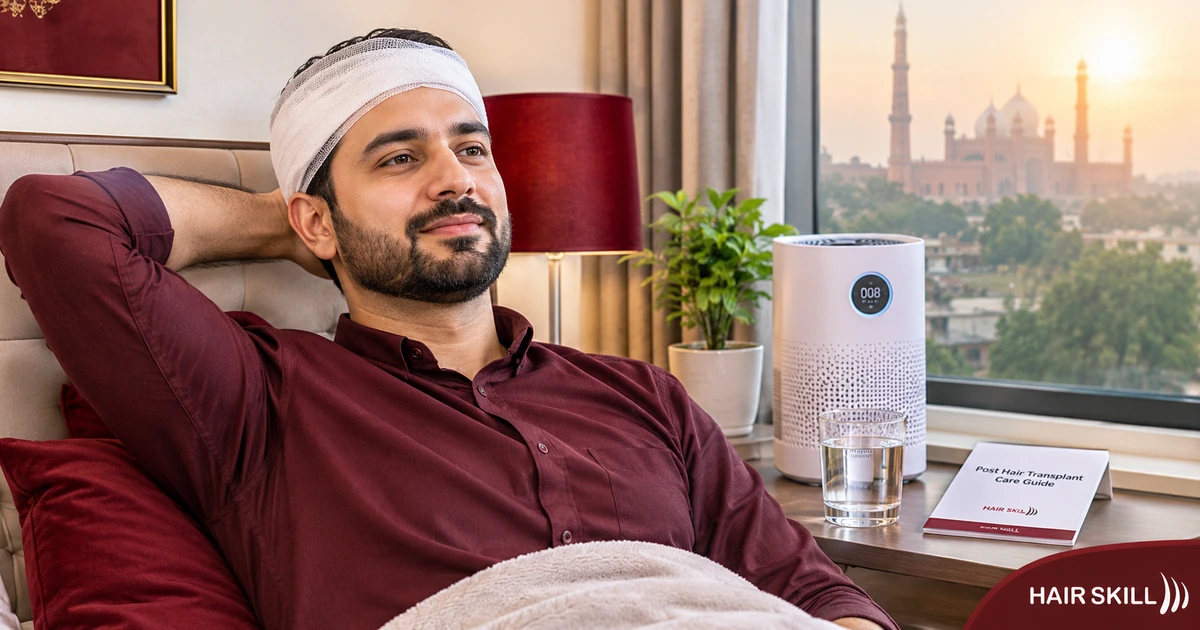
From late October through December, the city experiences severe air pollution in the form of a thick, grey haze. During this period, it is essential to take indoor precautions both to manage the smog and hair transplant recovery. Fine dust particles suspended in the outdoor air can irritate a sensitive scalp and exacerbate itching; furthermore, if you spend several hours outdoors, these particles may accumulate near the newly created micro-channels. Poor air quality can also lead to a sore throat, allergies, and persistent coughing. Frequent coughing can increase blood pressure in the head, potentially causing minor bleeding around the newly implanted graft protection.
Keep your bedroom windows securely closed, use an air purifier indoors, and avoid evening walks outside when the Air Quality Index (AQI) is high. If you must go out even for a short trip and choose to wear a protective mask, opt for one with soft ear loops rather than tight elastic bands that might exert pressure on the donor area (the back of the head). Patients prone to asthma or sinus issues that worsen during periods of heavy smog might consider postponing their surgery until the air clears (following rain), or scheduling their procedure for late January or February.
Monsoon and Humid Months
During the early days of July, August, and September, the weather often features pleasant rain accompanied by intense, stifling humidity. Even when the sky is overcast in the morning, the high humidity causes the skin of a person to become damp within minutes of stepping onto a rooftop or driveway. This persistent moisture can create challenging conditions during the initial recovery phase. Constant sweating, combined with a humid indoor environment, can leave the scalp feeling greasy, increase the scalp infection risk, and tempt the patient to rub or pick at the forming scabs.
Ensuring proper air circulation indoors can easily resolve most monsoon-related issues. Run your air conditioner on "dry mode" or use a dehumidifier to keep the healing skin clean and dry. Gently blot any moisture from your forehead using a soft, clean tissue, but be careful not to touch the transplanted areas. Most importantly, strictly follow the post-op hair washing guide provided by the clinic during these humid weeks. Washing your hair with care removes the layer of salty sweat and facilitates the proper scab healing without damaging the newly implanted hair follicles.
For many office professionals, the final days of August are actually the best time for hair transplant in Lahore; the intense heat of June has subsided, and securing an appointment at a clinic is generally easier compared to the peak winter season.
Hair Transplant During Ramadan
For many local professionals and families arriving from abroad, office hours are reduced during the month of Ramadan, and the pace of daily life becomes relatively more relaxed. In such circumstances, many patients naturally wonder whether the religious observances of Ramadan can be safely reconciled with the post-operative care required after a hair transplant.
Fasting, hydration and medication timing
Undergoing a hair transplant in Ramadan can be safe, provided you have a thorough consultation with your doctor beforehand. Fasting does not directly damage the newly implanted hair follicles. However, during the first 72 hours post-surgery, the doctor places significant emphasis on proper hydration and the timely administration of antibiotics, painkillers, and anti-inflammatory medication. Since your body is working to heal thousands of tiny incisions in the scalp following the use of local anesthesia, abstaining from water on the day of the surgery could lead to weakness or dizziness and may also increase swelling in the forehead.
Most surgeons advise against fasting on the day of the surgery, ensuring you can drink water periodically and take your initial doses of medication on time. This missed fast can be made up later, in accordance with religious and medical guidance. For the remainder of your recovery period, your doctor can easily schedule your medication intake between Sehri (pre-dawn meal) and Iftar (breaking of the fast). Between Iftar and Sehri, consume an adequate amount of plain water and light beverages; avoid overly salty or fried foods, as these can exacerbate swelling. Additionally, ensure you complete the process of gently washing your hair before going to sleep.
With clear medical guidance, undergoing a hair transplant in Ramadan can easily be integrated into your calm, home-based routine.
Planning Around Work, Weddings and Events
When deciding when to get a hair transplant, considering the local weather alone is not enough; your work schedule and upcoming family events are often far more significant. Most people prefer to return to meetings or social gatherings only after the noticeable redness on the scalp has faded and the small scabs have cleared up.
Careful work leave planning allows you to set aside five to seven days for recovery at home. This is especially important if your job involves dusty environments, physical labor, or the requirement to wear specific headgear. Those with office-based roles or those who work from home can often return to light tasks (such as using a laptop) within three days, though they may choose to limit video calls or manage them as usual while waiting for the visible scabs to disappear, which typically happens by around the tenth day.
For major events, it is essential to plan well in advance. Transplanted hair initially sheds after a period, only to begin growing back normally thereafter, as detailed in a standard recovery timeline. Consequently, the first visible results typically appear around the six-month mark, while full, mature hair density is generally achieved between nine and twelve months post-procedure. In Lahore, the wedding season which runs from November to February often results in a very busy schedule of social events. If you want your hair to appear thicker by December of next year in time for your own nikah, walima, or any other family event it is best to book your appointment about a year in advance (ideally during the previous winter or early spring) to secure the best time for hair transplant in Lahore.
A Simple Month-by-Month Planning Table
Throughout the year, weather conditions, patient volume at clinics, and the comfort of staying indoors vary. Use this brief guide to compare the seasons of Lahore against your daily routine and select the time that works best for you.
| Months | Typical Weather in Lahore | Recovery Comfort Level | Key Practical Planning Note |
|---|---|---|---|
| January to February | Cool, crisp, and mostly clear | Very high comfort | Minimal perspiration, high clinic demand, reserve early |
| March to April | Mild warmth and pleasant air | High comfort | Comfortable balance before peak summer heat begins |
| May to June | Intense dry heat and strong glare | Moderate comfort | Plan strict indoor rest inside air-conditioned rooms |
| July to September | Rain showers and heavy humidity | Moderate comfort | Rely on dry cooling and consistent gentle scalp washes |
| October to December | Cool weather with smog spikes | High indoor comfort | Keep windows closed and run air purifiers on hazy days |
Frequently Asked Questions
Can I undergo a hair transplant in Lahore during the summer?
Yes, a hair transplant in summer, provided that you remain indoors in an air-conditioned environment for the first ten to fourteen days. Avoid midday sun, refrain from traveling on motorcycles, and keep your scalp dry to ensure the newly implanted grafts remain securely in place.
Is it safe to undergo a hair transplant during the month of Ramadan?
Yes, it can be safe to undergo a hair transplant in Ramadan, provided that the surgeon reviews your daily routine. Doctors typically advise maintaining adequate water intake on the day of the surgery and scheduling post-operative medication between Sehri (pre-dawn meal) and Iftar (breaking of the fast) to ensure proper hydration.
Does smog affect the results of a hair transplant?
Outdoor haze does not ruin hair roots beneath the skin, yet smog and hair transplant recovery call for smart indoor precautions. Staying inside with filtered air on high-AQI days keeps dust off tender crusts and lowers allergy irritation.
What is the best time of year to undergo a hair transplant in Pakistan?
February, March, and October are considered the most favorable months due to their moderate temperatures. Many patients choose to undergo a hair transplant in winter Pakistan, as it helps avoid sweating and ensures greater comfort. However, the best time for hair transplant in Lahore primarily depends on when you can take a stress-free break from work.
How far in advance should I book?
You should book your consultation and surgery four to six weeks in advance; during the peak winter season, it is advisable to book about two months ahead. Booking early gives you ample time to complete your pre-surgery checklist, review your medications, and arrange a comfortable journey home.
Choose Your Ideal Date With Our Clinic
Waiting for the "perfect" weather may only further delay the results you desire. With proper rest at home and careful supervision by your doctor, any season in Lahore is suitable for achieving natural, long-lasting hair restoration. Whether you prefer recovering during the pleasant mornings of winter, the tranquil afternoons of Ramadan, or within the comfort of an air-conditioned environment during the summer, the best time for hair transplant in Lahore is simply when you can dedicate time to the necessary care and precautions within your daily routine.
Contact our clinic team today to have your scalp examined, discuss your daily routine, and select a date for your hair transplant that aligns with your personal convenience and preferred timeline.