
Scalp Washing Guide After Surgery
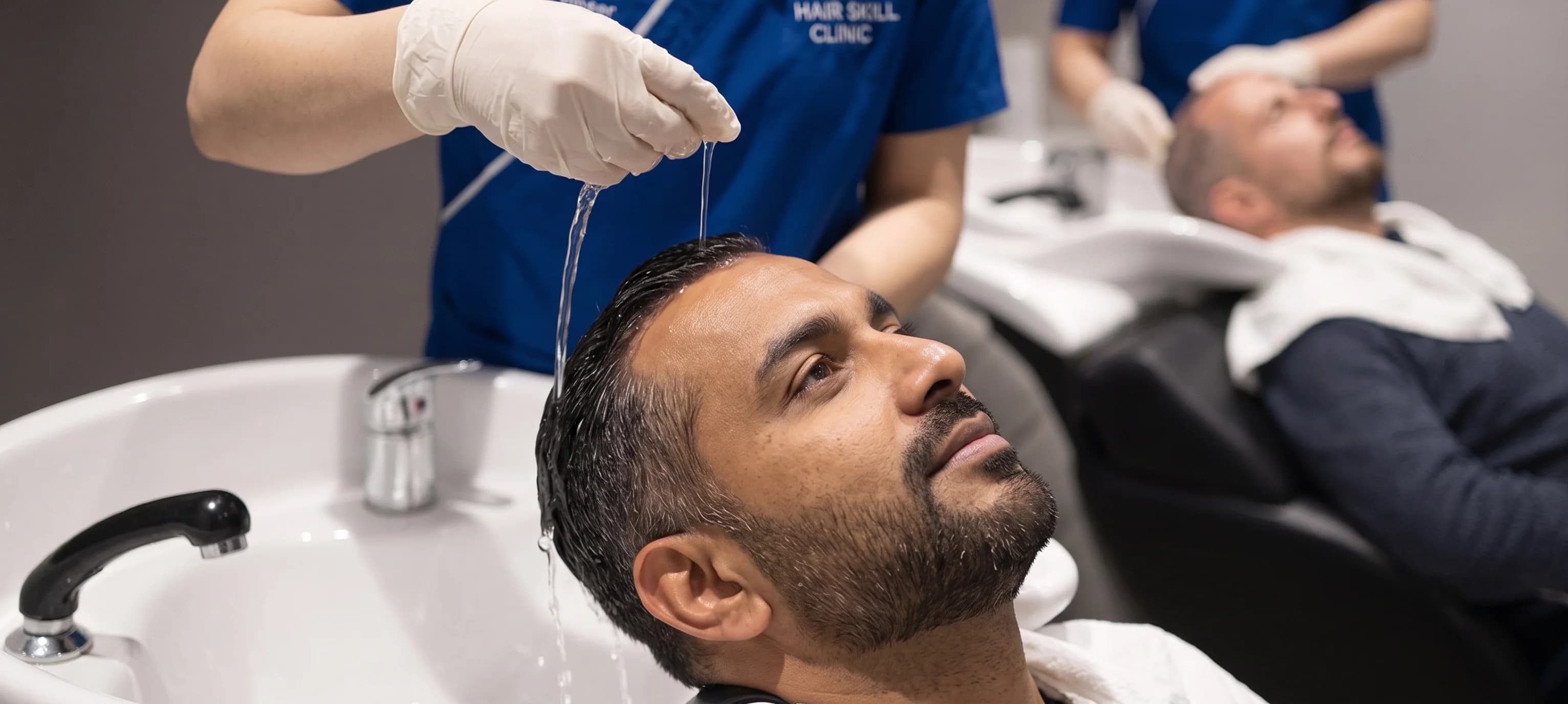
Learning to cleanse your scalp after the procedure is one of the most essential parts of your recovery. Whether you had your surgery in Lahore, Karachi, Multan, or Rawalpindi, following the correct post-op washing steps ensures your newly implanted grafts remain safe. If you are looking for a safe restoration clinic near me with the lowest price and best postoperative care, Hair Skill Clinic is your ultimate destination. Here is the complete guideline to answer your questions regarding cleansing your scalp post-surgery!
Wait for Two Days for the First Wash
When you wash the newly transplanted area of your scalp immediately after the surgery, it may damage your sensitive follicles. We recommend waiting to cleanse your scalp at least 36 to 48 hours after your procedure. At Hair Skill Clinic, we usually perform your initial wash professionally to ensure zero damage.
You can learn how to cleanse your head properly by watching the detailed tutorial on our YouTube channel. If a patient experiences more bleeding or discharge than usual, our experts can perform the first head wash the very next day.
How Often to Cleanse Your Scalp After Surgery
Patients frequently ask when they can cleanse their scalp after a procedure and how often they should do it. It is advisable to wash your head once a day for the first month after surgery. For the first two weeks, you must follow the exact gentle tapping method we taught you in the clinic or demonstrated on our YouTube channel.
Two weeks after the surgery, you can slowly transition to washing your scalp the way you used to do before. After a month, you can reduce the frequency and cleanse your scalp once every two or three days.
Apply Lotion and Foam Correctly
You can use medical lotion or foam on both the donor and recipient areas. Applying lotion promotes skin cell renewal, hydrates the scalp, and softens post surgery scabs. While using these products, please be extremely gentle and use light tapping motions. Before rinsing, wait at least 20 to 40 minutes.
We recommend applying Panthenol spray, which soothes, cools, and protects your healing skin. You should use Panthenol spray for the first 10 to 14 days. If you run out of it, Bepanthol lotion is an excellent alternative. Stop using lotion or foam completely once all the scabs have safely fallen off.
Apply the supplied antibiotic cream only on your donor area for the first 5 to 7 days after the surgery. Do not apply it over your recipient zone under any circumstances. After 5 to 7 days, your donor area will be fully healed.
Wash Your Scalp in a Proper Way
While shampooing your recipient area, you must exercise extreme caution. After pouring shampoo over the recipient zone and making it foamy in your hands first, do gentle tapping in a vertical direction with your fingertips. Please do not rub and strictly avoid circular movements on the recipient zone.
To prevent any infection and ensure a smooth healing process, wash your donor area by gently rubbing to clean dried blood and any tissue remnants.
Apply Advised Shampoos
Before applying any shampoo different from the one we supplied at Hair Skill Clinic, please consult your doctor. Your physician will guide you to choose a suitable shampoo for your specific scalp condition. Applying the advised shampoo will help you remove scabs safely and improve overall healing.
Rinsing Guidelines
Water temperature is crucial. It should not be cold, and it should not be hot. Always use warm water with very low pressure. Avoid using a direct shower header to wash your head for the first 14 days after the surgery. Instead, you can use a small bowl or switch the shower header to a gentle, low pressure setting.
Drying Your Scalp Safely
The recipient and donor areas require completely different drying techniques. Please dry your recipient transplant site with a soft paper towel. Gently apply it over the newly transplanted grafts so it absorbs the water naturally. Do not rub the recipient area at all.
You can dry your donor area with a regular clean towel. Hairdryers are not recommended unless you strictly use the cool air mode. If it is possible, letting your scalp air dry naturally is the safest option.