PRP vs Hair Transplant: Is PRP Necessary After Hair Transplant?
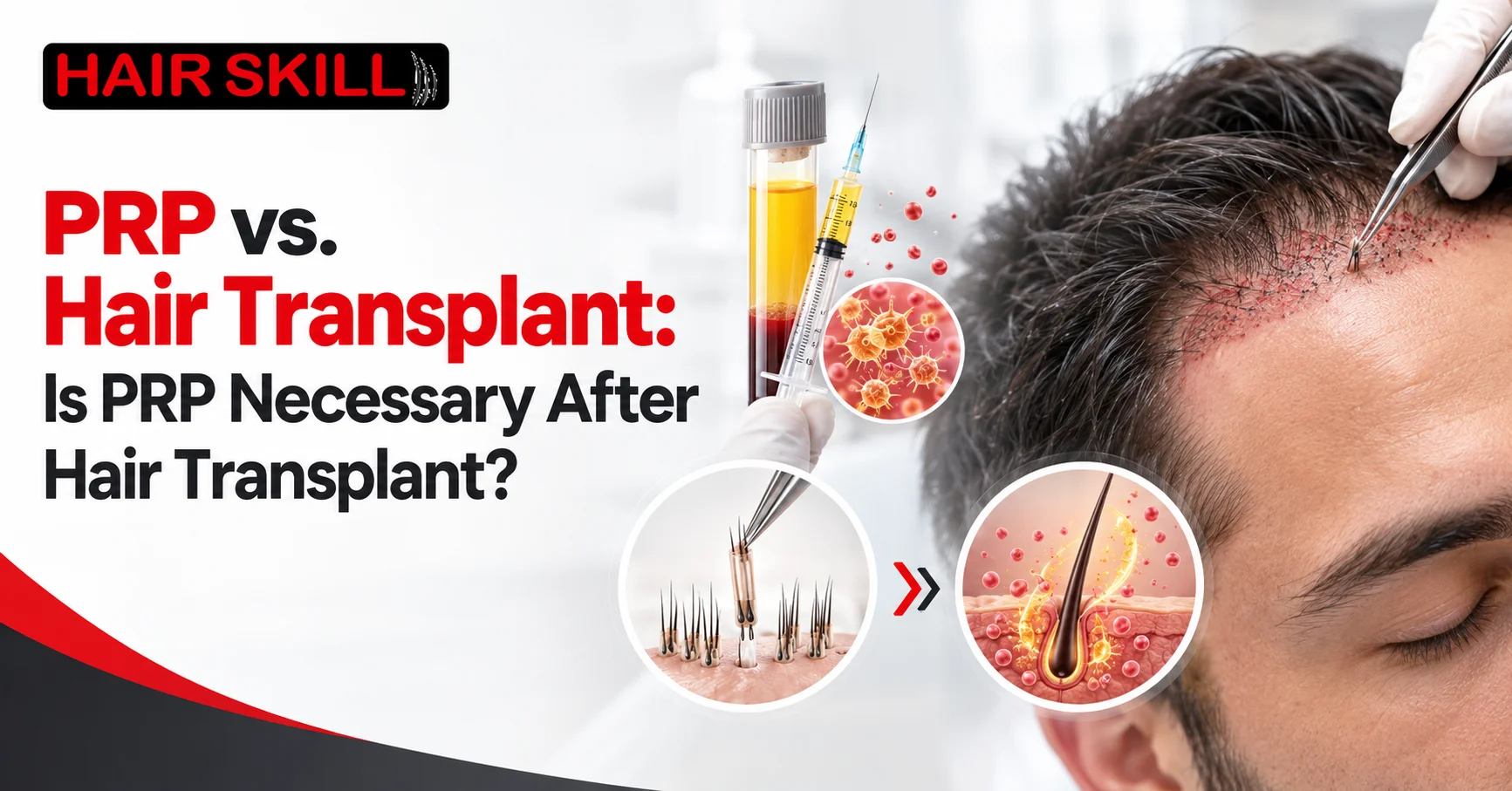
With so many hair loss treatments discussed online, patients often wonder how surgical and non-surgical options fit together. You have likely encountered two primary clinical solutions: PRP therapy and surgical hair restoration. Many patients ask whether getting PRP after a hair transplant is mandatory or optional for boosting their density. Let us examine how these two treatments complement each other.
1. PRP vs. Hair Transplant: Which is Better?
To make an informed decision, you must first understand the distinct biological role of each procedure. During a hair transplant (such as Manual FUE or DHI), healthy follicles are surgically relocated from your donor zone to bald areas. Conversely, Platelet-Rich Plasma (PRP) therapy is a non-surgical injectable treatment that uses your own concentrated blood platelets to nourish existing roots.
Asking which is better is one of our most common patient questions. In clinical practice, they are not rivals—think of the transplant surgery as planting seeds in bare soil, and the plasma therapy as the nutrient-rich fertilizer that helps both new and native hairs thrive.
| Feature | Hair Transplant (FUE / DHI) | PRP Plasma Therapy |
|---|---|---|
| Primary Purpose | Relocates permanent follicles to bald zones | Stimulates and thickens living follicles |
| Procedure Type | Microsurgical outpatient restoration | 30-minute non-surgical micro-injection |
| Best Suited For | Receding hairlines and smooth bald spots | Thinning hair, weak roots, & post-op healing |
2. Is PRP Necessary After a Hair Transplant?
While your transplanted grafts will still anchor and grow without PRP if you follow proper post-op recovery care, adding PRP after hair transplant surgery provides four distinct biological advantages:
- Accelerates Scalp Healing: Natural growth factors speed up tissue repair and reduce post-operative redness and scabbing.
- Supports Graft Survival: Promotes rapid microvascular angiogenesis (new blood supply formation) around freshly implanted roots.
- Protects Surrounding Native Hair: Prevents progressive thinning in your non-transplanted native hair so you do not develop gaps behind your new hairline.
- Minimizes Shock Loss & Speeds Sprouting: Helps resting follicles transition back into the active anagen growth phase sooner.
3. When Should You Do PRP After a Hair Transplant?
Timing is important to protect fragile grafts. Surgeons typically recommend scheduling your first post-op PRP session around 3 to 4 weeks after surgery, once the grafts are securely anchored in the dermis. A series of 3 to 4 sessions spaced one month apart during the first four months provides strong biological support during the early sprouting phase.
4. Choose Hair Skill Clinic in Gulberg for Complete Restoration
Combining surgeon-led transplantation with regenerative plasma therapy creates an optimal environment for dense, natural hair growth. To plan your procedure, book a consultation at Hair Skill Clinic in Gulberg III, Lahore.