
Choosing the Right Hair Transplant Method Based on Your Baldness Stage
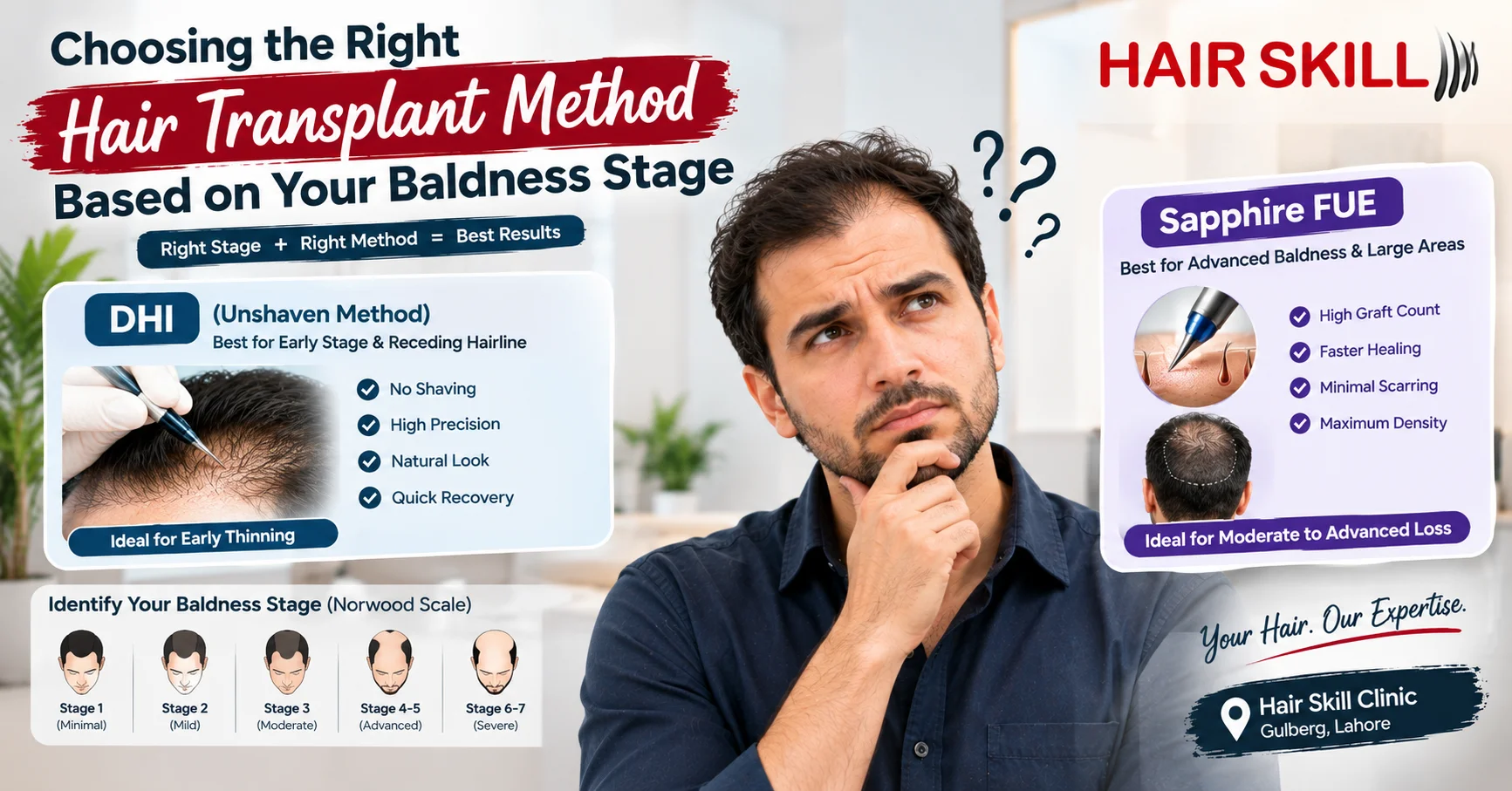
A one-size-fits-all strategy for efficiently treating baldness is just ineffective. The hair thinning pattern of each person is entirely different, necessitating a customized remedy. A totally natural appearance and the precise density you want are guaranteed when you use the right hair transplant method. Hair Skill offers cutting-edge alternatives, including FUE, DHI, and Sapphire treatments, if you are currently considering surgical choices. Understanding your unique physiological condition and general scalp health is crucial to choosing the best hair transplant technique.
How to Identify Your Baldness Stage
The Norwood scale is a key tool used by medical experts to determine the severity of male baldness. Knowing this diagnostic tool aids medical professionals in selecting the best hair transplant method for your unique scalp needs. To make hair loss easier to comprehend, we can often classify it into three simple types. The first stage is called the Early Stage, and it is mostly distinguished by a receding hairline and slight temple loss. The moderate stage comes next, during which patients start to see early indications of crown baldness combined with noticeable thinning at the frontal region. Lastly, the Advanced Stage is characterized by total baldness throughout the upper part of the head. The most important first step in preparing for any surgical procedure is identifying your present phase.
Early Stage & Receding Hairline
Many people battle with a retreating front hairline or somewhat thinned patches, but they still have healthy strands on their scalp. Direct hair implantation is a really good option for this very particular issue. Because the surgeon employs a highly specialized Choi implanter pen, DHI outperforms FUE in the early phases. With the use of this sophisticated instrument, medical professionals can carefully insert individual hair follicles in between your natural hairs. The ability to have an entirely unshaven treatment without ever having your full head clipped is the biggest operational benefit. In order to frame your face in the front, this exceptional precision delivers maximum density precisely where you need it.
Advanced Baldness & Large Areas
You will undoubtedly need a very large graft count, ranging from 3000 to well over 5000 units, if you are currently experiencing severe hair loss that falls under Norwood stages four through seven. Sapphire Follicular Unit Extraction is the ultimate gold standard for covering big open areas in this difficult situation. Instead of using conventional steel equipment to make small microchannels, the surgeon uses unique sapphire blades. A large number of roots can be securely transplanted in a single, lengthy session thanks to this extremely sophisticated technique. Compared to more traditional methods, patients benefit from far quicker healing times and less scarring. Because of this, it is a very comfortable and successful method for comprehensive scalp repair.
What About Female Pattern Hair Thinning?
Instead of localized bald spots, women usually experience a progressive decrease of hair volume throughout the scalp. A specific female surgery using either advanced FUE or DHI techniques is the perfect solution in this case. These sensitive procedures are carried out by top clinics with very little shaving. This particular method guarantees that the entire medical procedure is kept absolutely private and undetectable to friends and coworkers.
Conclusion & Call-to-Action
Your particular stage of thinning and the available donor capacity are the only factors that determine which hair transplant method is best for you. Do not wait to seek professional assistance or make assumptions about your current stage. For expert hair restoration in Lahore, schedule a free appointment or email your photos straight to the Hair Skill Clinic. Allow our PMC-verified surgeons to thoroughly assess your situation and suggest the best course of action for you right now.